

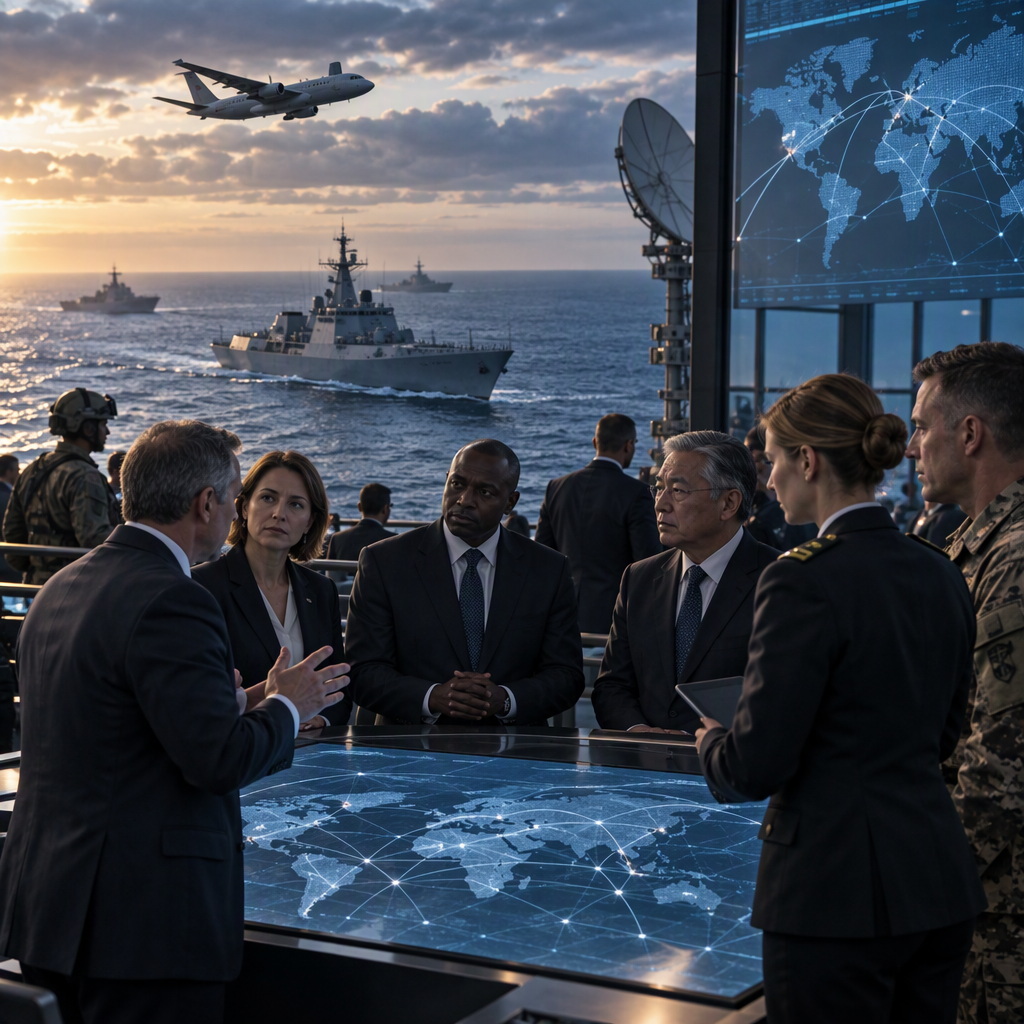
International security and defense developments play an important role in shaping global politics, diplomatic relations and regional stability. Governments and international organisations continually assess security challenges, military developments and emerging threats that may affect national interests and international peace. From armed conflicts and defense strategies to cybersecurity, military cooperation and peacekeeping operations, security issues influence countries and communities across the world.
Pressivoza provides international security and defense news updates covering major developments in global defense policy, military affairs, international conflicts, strategic partnerships and security cooperation. Our coverage aims to help readers understand how countries respond to security challenges, how international organisations work to prevent conflicts and how changes in military capabilities can influence global relations.
This category explores both traditional and emerging security issues, offering a broader perspective on the political, technological, economic and humanitarian factors that shape international security.
Global Security Developments and International Affairs
International security involves protecting countries, communities and institutions against threats that may undermine peace, stability and public safety. These challenges can include armed aggression, terrorism, political instability, cyberattacks, organised crime and regional disputes.
Pressivoza follows international security developments, government responses, diplomatic discussions and cooperation between countries. Coverage may examine changing security priorities, regional tensions, international agreements and efforts to prevent conflicts.
Global security is closely connected to international diplomacy and economic stability. A security crisis in one region can influence trade, energy supplies, migration, investment and diplomatic relationships elsewhere. Understanding these connections helps readers see why international security remains a central issue in world affairs.
Military News and Defense Developments
Military capabilities and defense policies are important parts of national security planning. Countries invest in armed forces, training, equipment, logistics and strategic planning to protect their territories and respond to potential threats.
This section covers international military developments, defense policies, military exercises, personnel changes and official announcements from defense institutions. Reports may explore developments involving land, air, naval and joint military capabilities.
Pressivoza aims to explain the wider context of defense developments rather than simply repeat official announcements. Readers can follow how defense decisions relate to national strategies, regional security concerns, international partnerships and broader geopolitical developments.
International Conflicts and Regional Security
Armed conflicts and regional tensions can have serious consequences for civilians, national economies and international relations. Disputes may involve territorial claims, political disagreements, historical grievances, security concerns and competition over resources.
Pressivoza reports on international conflicts and regional security developments, including diplomatic efforts, ceasefire discussions, humanitarian consequences and changes in political relationships. Coverage may examine conflicts in Europe, the Middle East, Africa and the Asia-Pacific region.
Responsible conflict reporting requires careful verification. Our coverage aims to distinguish confirmed information from claims made by parties involved in a conflict. Civilian protection, humanitarian conditions and the wider consequences of violence are important parts of understanding any international crisis.
Defense Technology and Military Innovation
Technology continues to influence the development of modern defense systems. Advances in communications, surveillance, aviation, cybersecurity, robotics, satellite systems and artificial intelligence are changing how countries approach security and military planning.
This category covers defense technology developments, military research, aerospace innovation, digital security systems and emerging technologies. Reports may explore the role of artificial intelligence in defense, the growing importance of satellite networks, developments in military aviation and the use of advanced communication systems.
Technological innovation can create new opportunities as well as new risks. Questions about reliability, accountability, international regulation and civilian protection remain important when evaluating emerging defense technologies.
NATO and International Defense Alliances
International defense alliances allow countries to coordinate security policies, conduct joint exercises and develop collective defense arrangements. These partnerships can influence regional stability, military planning and diplomatic relationships.
Pressivoza follows developments involving NATO and other international or regional security partnerships. Coverage may include alliance meetings, defense commitments, military cooperation, joint exercises and discussions about future security priorities.
For example, NATO’s collective defense principle is set out in Article 5 of the North Atlantic Treaty. It states that an armed attack against one member is considered an attack against all, subject to the treaty’s provisions. <Cite refs={[“turn372220search0″,”turn372220search4”]}/>
Our reporting aims to explain how alliances operate, what their commitments involve and how changes in membership, policy or defense priorities may affect international relations.
Cybersecurity and Digital Security Threats
Cybersecurity has become an essential part of international security. Governments, businesses, financial institutions, infrastructure operators and public organisations increasingly depend on digital systems. Cyberattacks can disrupt services, expose sensitive information and create risks for national infrastructure.
This section covers international cybersecurity developments, government cyber policies, digital threats, data protection, infrastructure security and international cooperation. Reports may explore cybercrime, ransomware incidents, state-linked cyber activity and efforts to strengthen digital resilience.
Cybersecurity reporting should avoid treating every digital incident as a confirmed state-sponsored attack. Attribution can be complex and requires credible technical evidence. Pressivoza aims to present these developments with appropriate context and attention to verified information.
Counterterrorism and International Security Cooperation
Terrorism remains a concern for governments and communities in different parts of the world. International cooperation can help authorities address terrorist financing, cross-border networks, recruitment, security threats and the movement of illicit resources.
Pressivoza covers counterterrorism policies, international security cooperation, government announcements and efforts to prevent politically motivated violence. Coverage may also examine the role of intelligence cooperation, law enforcement, border security and international legal frameworks.
Responsible reporting is particularly important when covering terrorism. Articles should avoid promoting extremist propaganda, glorifying violence or making unsupported claims about individuals and communities. The focus should remain on verified developments, public safety and the broader impact on society.
Arms Control, Disarmament and Nuclear Security
Arms control and disarmament are important parts of international efforts to reduce security risks. Countries may negotiate agreements to limit certain weapons, improve transparency, prevent proliferation and reduce the likelihood of military escalation.
This category explores nuclear security, non-proliferation agreements, conventional arms control and international discussions about weapons restrictions. Coverage may include diplomatic negotiations, treaty developments, international inspections and efforts to prevent the spread of weapons of mass destruction.
Arms control can contribute to international stability by improving communication and reducing uncertainty between countries. However, negotiations often involve complex political, legal and strategic considerations.
United Nations Peacekeeping and Conflict Prevention
The United Nations plays an important role in international peace and security. Its work includes conflict prevention, diplomatic engagement, peacekeeping operations and support for countries recovering from conflict.
Pressivoza follows United Nations security developments, Security Council discussions, peacekeeping missions and international efforts to support peace agreements. Coverage may examine ceasefire arrangements, humanitarian protection, political transitions and the challenges faced by peacekeeping personnel.
Peacekeeping is not a substitute for political solutions. Long-term stability often requires cooperation between local communities, national authorities and international partners. Understanding these efforts helps readers evaluate the wider process of conflict prevention and recovery.
Defense Budgets, Arms Industry and International Trade
Defense spending and the international arms industry influence national budgets, industrial development and diplomatic relationships. Governments make decisions about military procurement, research funding, equipment maintenance and defense partnerships according to their security priorities.
This section covers defense budgets, military procurement announcements, defense manufacturing, international defense agreements and changes in the global arms industry. Articles may also explore the economic impact of defense investment and debates surrounding public spending priorities.
Accurate reporting should distinguish between proposed budgets, approved funding and completed purchases. This helps readers understand the actual status of defense programmes and their financial implications.
Maritime, Border and Regional Security
Maritime routes, international borders and strategic transport corridors are important to global security and trade. Disruptions in these areas can affect shipping, energy supplies, migration and regional stability.
Pressivoza covers maritime security, border management, regional cooperation, shipping safety and developments involving important international waterways. Coverage may examine piracy, territorial disputes, maritime agreements and security measures affecting commercial transport.
These issues demonstrate how geography, international law and economic interests can intersect with national security policies.
Responsible International Security Reporting on Pressivoza
Security and defense reporting requires accuracy, balance and careful handling of sensitive information. Official military statements, government announcements and claims from parties involved in conflicts should be assessed against independent reporting and credible evidence wherever possible.
Pressivoza aims to provide informative international security coverage without sensationalism or unsupported speculation. Our International Security & Defense News category is designed for readers interested in military affairs, global conflicts, defense technology, cybersecurity, peacekeeping and international cooperation.
By following these developments, readers can gain a better understanding of the challenges affecting global stability and the diplomatic, political and institutional efforts intended to protect international peace.
Explore International Security & Defense News on Pressivoza for global updates on defense policies, military developments, security challenges and international peace efforts.