

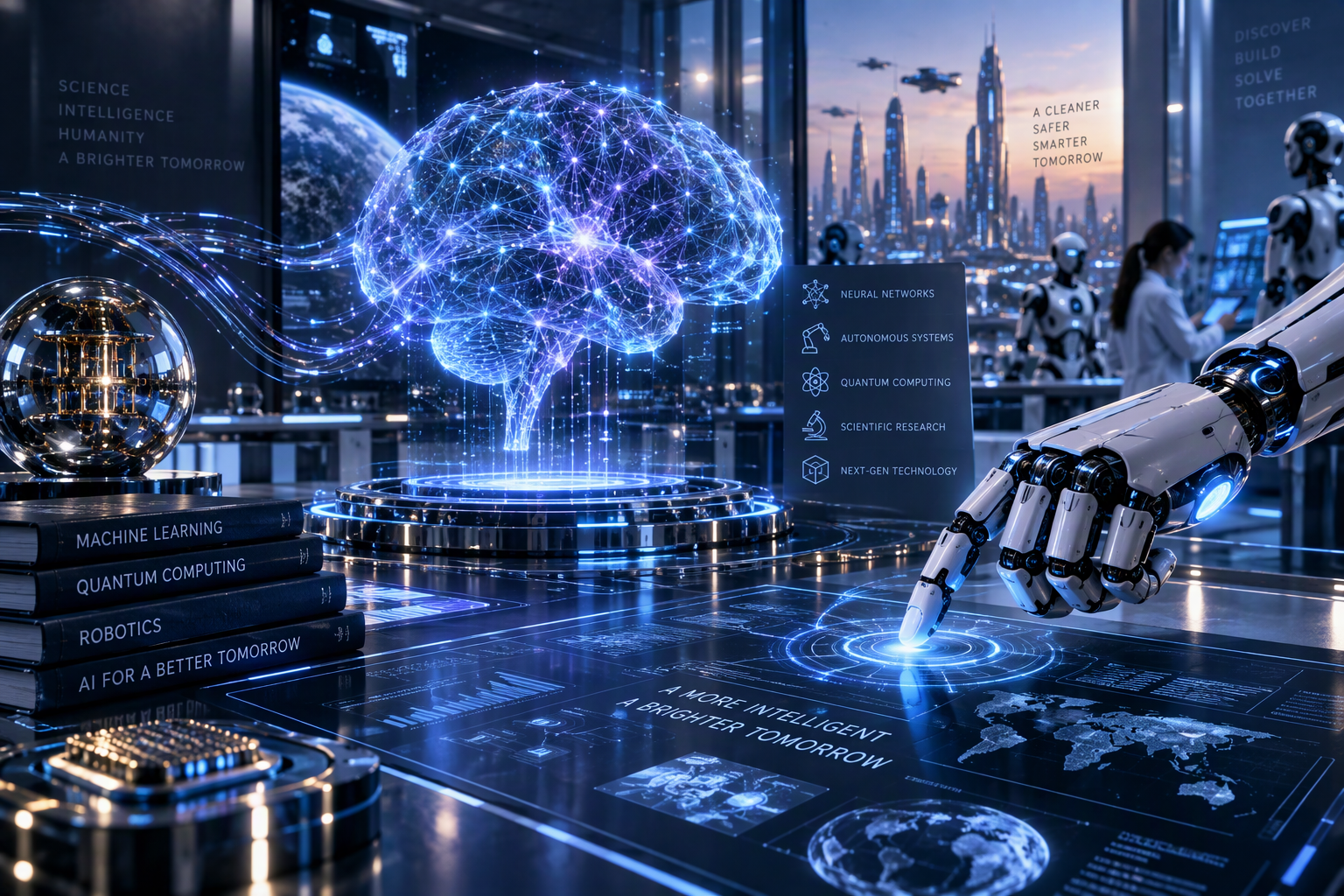
Artificial intelligence and future technology are transforming the modern world. From intelligent software and automated machines to advanced computing and scientific discoveries, technological innovation is changing how people work, communicate, learn, and solve problems. AI-powered systems are becoming increasingly important across industries, while emerging technologies are opening new possibilities for businesses, researchers, governments, and individuals.
At Pressivoza, our Artificial Intelligence & Future Technology News section provides informative coverage of important developments in AI, machine learning, robotics, automation, advanced computing, and emerging digital innovations. This category explores new technologies, research breakthroughs, industry developments, practical applications, and the opportunities and challenges shaping the future.
Our goal is to help readers understand complex technological developments through clear, accessible, and informative reporting.
Artificial Intelligence and Its Growing Influence
Artificial intelligence refers to computer systems designed to perform tasks that traditionally require human intelligence. These tasks may include understanding language, recognizing images, analyzing information, identifying patterns, making predictions, and supporting decisions.
AI technology is developing rapidly and is being adopted in areas such as business, healthcare, education, finance, transportation, manufacturing, and scientific research.
Companies use AI systems to improve productivity, automate repetitive activities, analyze large datasets, and develop new digital products. Governments and research institutions are also exploring AI applications in public services, infrastructure, and scientific discovery.
As adoption increases, questions about accuracy, transparency, privacy, fairness, and human oversight are becoming increasingly important. Pressivoza follows these developments and explores how artificial intelligence is influencing different parts of society.
Generative AI and Advanced Language Models
Generative artificial intelligence is one of the most widely discussed areas of modern technology. These systems can generate text, images, audio, video, and computer code based on user instructions and available information.
Large language models are designed to process and generate human language. They can support writing, translation, research, customer service, programming, and information analysis.
AI image and video generation tools are also changing creative industries by helping users produce visual content and explore new design possibilities.
However, generative AI systems can sometimes produce inaccurate or misleading information. They may also raise concerns involving copyright, data privacy, intellectual property, and the authenticity of digital content.
Our coverage explores major AI model releases, new capabilities, practical applications, and the issues that users and organizations should understand.
Machine Learning and Deep Learning
Machine learning is a branch of artificial intelligence that enables computer systems to identify patterns in data and improve their performance through training. Instead of relying entirely on manually written instructions, machine learning models learn from examples and information.
Deep learning uses artificial neural networks with multiple processing layers to handle complex tasks. It plays an important role in image recognition, speech processing, language models, medical research, and autonomous systems.
These technologies are used in recommendation systems, fraud detection, predictive maintenance, customer analytics, and many other applications.
Researchers continue to explore ways to make machine learning systems more accurate, efficient, explainable, and reliable. Pressivoza follows important research developments and explains their potential real-world applications.
AI Agents and Autonomous Technology
AI agents represent an emerging direction in artificial intelligence. These systems can be designed to plan tasks, use digital tools, retrieve information, and complete multiple steps with varying levels of human supervision.
For example, an AI agent may help organize information, manage a digital workflow, or interact with approved software systems to complete a business task.
Multi-agent systems involve multiple AI agents working together on different parts of a larger process. Such systems may support research, software development, business operations, and complex problem-solving.
However, autonomous systems require careful design and monitoring. Errors, security vulnerabilities, unauthorized actions, and unreliable outputs can create risks when systems operate without sufficient human oversight.
Pressivoza covers developments in AI agents, autonomous workflows, and intelligent digital assistants.
Robotics and the Future of Automation
Robotics combines engineering, software, sensors, and artificial intelligence to create machines capable of performing physical tasks. Robots are widely used in manufacturing, warehouses, agriculture, healthcare, research, and industrial operations.
Advances in machine learning and computer vision are helping robots understand their environments and respond to changing conditions. Humanoid robots and general-purpose robotic systems are also attracting research and commercial interest.
Automation can improve efficiency, accuracy, and workplace safety in certain environments. At the same time, its wider adoption may change job requirements and increase the need for technical training.
Our technology coverage explores robotics research, industrial automation, intelligent machines, and the future of human-machine collaboration.
Quantum Computing and Advanced Processing
Quantum computing is an emerging field that uses principles of quantum mechanics to process information in ways that differ from conventional computing.
Traditional computers use bits represented as zeros or ones. Quantum computers use quantum bits, or qubits, which can operate through quantum states that enable different computational approaches.
Researchers are investigating potential applications in chemistry, materials science, optimization, and other specialized areas. However, practical quantum computing remains challenging because systems require highly controlled conditions and must address issues such as noise, error correction, and scalability.
Pressivoza follows developments in quantum hardware, research, software, and advanced computing technologies while distinguishing experimental progress from commercially available capabilities.
AI in Healthcare, Science, and Education
Artificial intelligence is creating opportunities in scientific research, healthcare, and education.
In healthcare, AI tools may assist with medical image analysis, research, administrative processes, and clinical decision support. These technologies require appropriate validation, privacy protections, and professional oversight before being used in high-stakes settings.
In scientific research, AI can help researchers analyze large datasets, identify patterns, develop hypotheses, and explore possible solutions to complex problems.
Education is also changing through intelligent tutoring systems, personalized learning platforms, language tools, and automated administrative support. Responsible implementation remains important to protect student information and maintain educational quality.
Our coverage explores how AI is being applied across these sectors and what the developments may mean for professionals and the public.
AI Safety, Cybersecurity, and Responsible Innovation
The growing capabilities of artificial intelligence create important questions about safety and security. AI systems may be vulnerable to manipulation, data exposure, inaccurate outputs, and misuse.
Cybersecurity researchers are exploring ways to protect AI models, training data, applications, and the infrastructure supporting intelligent systems. Organizations are also developing policies for responsible AI adoption and human supervision.
Important topics include algorithmic bias, transparency, accountability, intellectual property, digital privacy, and the effect of automated decision-making on individuals.
Pressivoza aims to cover these issues through balanced reporting that recognizes both the opportunities and risks associated with emerging technologies.
The Future of Artificial Intelligence and Technology
The future of technology may be shaped by developments in autonomous systems, advanced semiconductors, robotics, quantum computing, biotechnology, intelligent software, and next-generation communication networks.
These innovations could influence manufacturing, transportation, energy, healthcare, scientific research, and everyday digital services.
However, technological progress does not guarantee immediate or universal adoption. Infrastructure costs, regulation, safety, public trust, technical limitations, and access to skills will all influence how new technologies develop.
Understanding the future requires following research breakthroughs while examining their practical limitations and wider social consequences.
Stay Updated with AI and Future Technology News on Pressivoza
Artificial intelligence and emerging technologies are creating significant changes across industries and societies. Following these developments helps readers understand new opportunities, important challenges, and the innovations that may influence the years ahead.
Through our Artificial Intelligence & Future Technology News category, Pressivoza aims to provide informative coverage of AI research, generative models, machine learning, robotics, automation, quantum computing, and advanced technological developments.
Whether you are a technology enthusiast, researcher, student, developer, business professional, or general reader, this section offers a place to explore the ideas and innovations shaping the future.
Follow Pressivoza for artificial intelligence news and future technology updates from around the world.